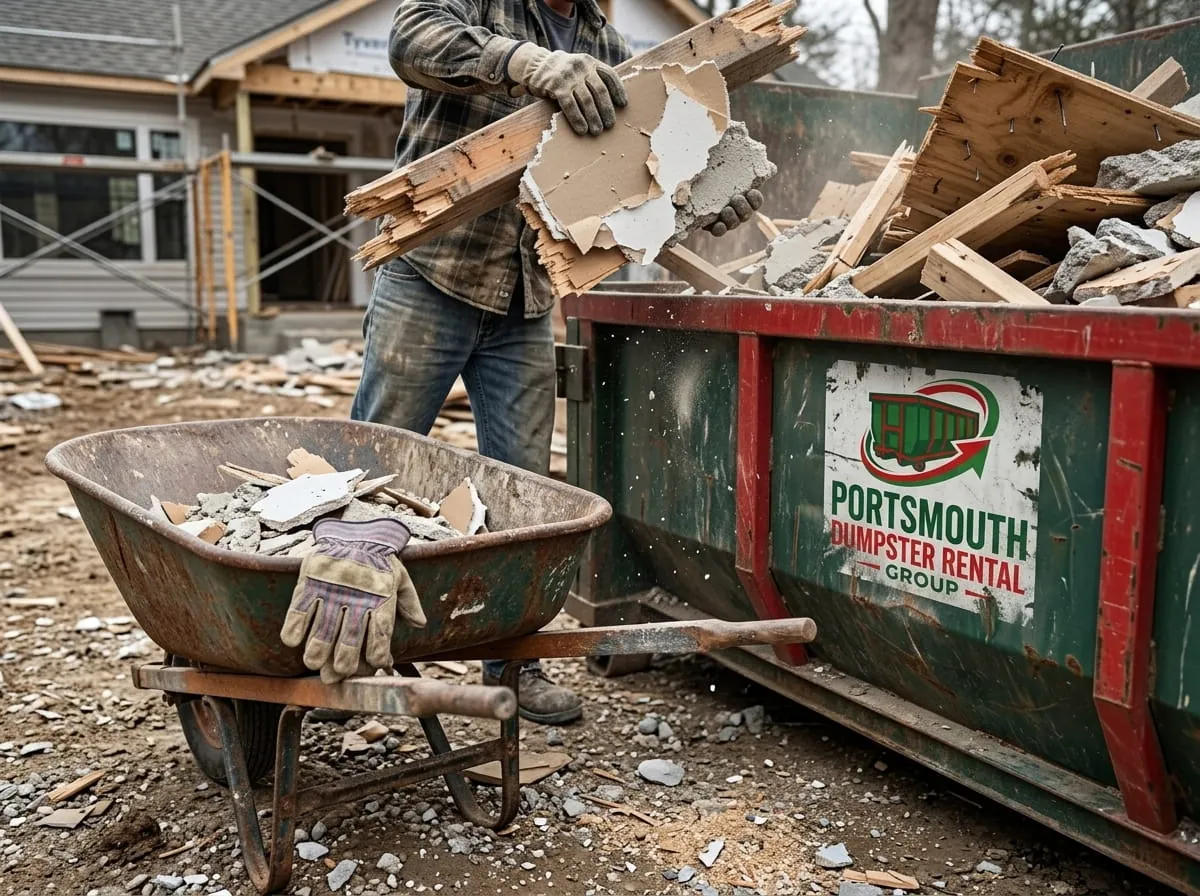
Construction and demolition debris is the single largest waste stream most Portsmouth contractors generate, and how you handle it on site decides whether a job stays profitable or bleeds money in overweight fees, rejected loads, and lost days. Whether you are gutting a Federal-era rowhouse in Olde Towne, framing a new build out in Churchland or Western Branch, or running commercial tear-out near the naval shipyard, the fundamentals are the same: know your waste types, keep the heavy inert material separate, respect weight limits, and route each stream to the right Southeastern Public Service Authority (SPSA) facility. This guide walks through how to do that cleanly and in line with Virginia DEQ rules.
Know your C&D waste streams before the first load
C&D waste is not one material, it is a dozen, and they behave very differently in a container. Before you drop a single bin, break the job down by what the structure is actually made of. The common Hampton Roads streams are:
- Drywall (gypsum board). Light but bulky, and a problem in volume. Wet gypsum produces hydrogen sulfide in a landfill, so some facilities restrict large quantities. It compacts poorly and eats cubic yards fast on remodels.
- Lumber and dimensional wood. Framing offcuts, sheathing, old joists. Clean, untreated wood is recyclable or chippable. Treated, painted, or engineered wood (LVL, OSB, plywood with adhesives) is handled differently and usually landfilled.
- Brick and masonry. Extremely heavy. A single pallet-equivalent of brick can swallow a container's entire weight allowance while barely covering the floor.
- Concrete. The heaviest common stream by far, and the one that most often causes overweight tickets. Clean concrete is highly recyclable as crushed aggregate.
- Roofing (asphalt shingles). Dense and heavy, especially on multi-layer tear-offs. A full tear-off on a typical Portsmouth roof can run well past what people expect in tonnage.
- Siding. Vinyl, fiber cement, and wood siding each sort differently. Older homes may hide asbestos-containing material in siding or flashing, which must be tested and abated before demolition.
Sorting at the source, as you demo, is almost always cheaper than paying a facility to sort or dumping a mixed load at mixed-waste tipping rates. It also protects your diversion numbers if the job is chasing LEED credit.
Separate the heavy inert debris, every time
The most important habit on any Portsmouth job site is keeping heavy inert debris, concrete, brick, block, asphalt, dirt, and rock, out of your general C&D container. There are two reasons, and both cost money if you ignore them.
First is weight. Roll-off containers have a weight allowance built into the rental, and inert material blows through it almost instantly. A 30-yard roll-off loaded with mixed construction debris rides fine, but the same box half-full of concrete can exceed road-legal haul limits before it is even full. That triggers overweight charges, and in some cases the hauler cannot legally transport it at all, so the box sits and your schedule slips.
Second is recycling economics. Clean concrete and masonry are valuable as recycled aggregate. Mixed into drywall, wood, and packaging, that same concrete becomes contaminated waste headed for the landfill at full tipping cost. Keep it clean and it may be diverted instead of dumped.
That is why concrete, dirt, and heavy masonry belong in dedicated bins. On a mixed demolition, run two containers: a general C&D box for wood, drywall, roofing, and siding, and a separate heavy-debris box for inert material. If you are handling significant volumes of slab, footings, or masonry, a dedicated concrete and heavy debris service uses lower, specially rated containers so you can load to volume without going overweight.
Understand weight limits and why they are not optional
Every roll-off rental is priced against a tonnage allowance. Exceed it and you pay a per-ton overage, which can turn a predictable line item into an ugly surprise on the invoice. The trap for new PMs is assuming a bigger box means more weight capacity, it means more volume, not more tonnage. The road-legal limit on the truck is the real ceiling.
Practical rules for Hampton Roads crews:
- Match the container to the material, not just the pile size. Use a smaller, heavy-rated box for inert debris and a larger box for bulky-but-light material like framing and drywall.
- Never bury concrete or dirt at the bottom of a general bin to hide it. It still gets weighed, and it still gets billed.
- Load evenly and keep material below the fill line so the box can be tarped and legally hauled.
- If you are unsure how a mixed load will weigh out, ask before you fill. Sizing is the cheapest part of the job to get right. Our team can spec the right combination, start at construction dumpster rental or call to talk it through.
What actually recycles in Portsmouth and Hampton Roads
The Southeastern Public Service Authority (SPSA) is the regional waste authority serving Portsmouth, Suffolk, Chesapeake, Norfolk, Virginia Beach, and the surrounding communities. SPSA operates the regional landfill in Suffolk along with a network of transfer stations across South Hampton Roads, and these are where most C&D and inert material from local jobs ultimately goes. Routing material to the correct SPSA facility, rather than the nearest convenient dumpster, is what keeps diversion real and tipping costs controlled.
Streams that commonly divert from landfill in our area:
- Clean concrete, brick, and block go to crushing operations and come back as recycled aggregate and road base. This is the single highest-volume diversion opportunity on most demolition jobs.
- Scrap metal, rebar, copper, conduit, ductwork, structural steel, has real salvage value and should never hit a landfill bin.
- Clean, untreated wood can be chipped for mulch or biomass.
- Cardboard and packaging from new-construction deliveries recycle easily and keep your general container freer for genuine debris.
- Asphalt shingles can be recycled into road material through specialized processors, though availability varies, confirm before you commit a tear-off load to a diversion stream.
Drywall, mixed siding, insulation, and treated wood generally remain disposal streams rather than recyclables in this market. If you want a plain-English breakdown of what goes where, our guide to what can go in a dumpster covers the prohibited and restricted items worth flagging to your crew.
Container logistics on tight Olde Towne lots and open suburban sites
Where you can put the box is as important as what goes in it, and Portsmouth makes this a real consideration. Olde Towne renovations sit on narrow historic streets with limited frontage, street parking, and in many cases a city right-of-way permit requirement if the container sits on a public street. On those jobs:
- Scout placement before the box arrives. Confirm whether you can stage on the lot, the driveway, or must occupy the street, and secure any permit in advance.
- Use board protection under the container to avoid damaging historic brick drives, sidewalks, or pavers, damage you will otherwise be paying to restore.
- Favor a smaller footprint. A 20-yard box is often the right call on a constrained Olde Towne lot where a 30 or 40 simply will not fit or cannot be legally placed on the street. A properly sized roll-off rental beats cramming an oversized box into a space that triggers a permit problem or blocks neighbors.
- Plan swap-outs. On a tight lot you may run one box at a time and swap full for empty rather than staging multiples. Build that cadence into your schedule.
Churchland and Western Branch new builds and suburban remodels give you room to work, so the logic flips: stage multiple containers, separate your streams from day one, and position the heavy-debris box where the loader or skid steer can reach it without crossing finished surfaces. Shipyard-area and commercial work brings its own layer, tighter site security, coordinated truck access windows, and often a general contractor waste plan you must load against. In all three settings the discipline is the same: plan placement, separate streams, and keep haul routes clear.
Diversion and LEED basics for C&D
If your project is pursuing LEED or a comparable green-building standard, construction waste management is a tracked credit, and it lives or dies on documentation. The credit rewards diverting C&D material from landfill and incineration, measured by weight or volume, and it requires records: tickets, weights, and facility destinations for each diverted stream.
To hit diversion targets without scrambling at closeout:
- Separate at the source. Commingled loads sorted off-site count only if the facility can document the recovery rate, source separation is cleaner and more defensible.
- Keep every weight ticket. Each diverted and each landfilled load needs a record tied to the project.
- Prioritize the heavy streams. Concrete and masonry are heavy, so diverting them moves your by-weight diversion percentage more than any other single action.
- Decide your container plan before demo, not after. Retrofitting source separation onto a job already in progress is where diversion numbers fall apart.
Staying compliant with Virginia DEQ and SPSA rules
Virginia DEQ (Department of Environmental Quality) regulates how C&D waste is handled, transported, and disposed of across the Commonwealth, and the rules have teeth. A few non-negotiables for Portsmouth contractors:
- Test before you demo older structures. Pre-1980 buildings, common in Olde Towne and older Portsmouth neighborhoods, may contain asbestos in siding, flooring, pipe insulation, and roofing, and lead in paint. Asbestos abatement is regulated work with notification requirements, and asbestos-containing material cannot go in a standard C&D container. This is both a DEQ and a federal matter, and it is where demolition jobs get shut down.
- Keep banned items out. Hazardous waste, liquids, paints, solvents, asbestos, and certain regulated materials are prohibited from C&D containers and from the regional landfill. Segregate and handle them through the proper channels.
- Use permitted facilities only. C&D debris must go to a facility permitted to receive it. SPSA transfer stations and the regional landfill are the compliant destinations for most Portsmouth-area C&D, and a licensed hauler takes it there on manifest, protecting you from the liability of an illegal dump.
- Never open-burn or illegally dump. Burning C&D debris and dumping on unpermitted ground both carry significant DEQ penalties.
The cleanest way to stay compliant is to work with a hauler that already knows the SPSA system and DEQ requirements, so your material is sorted, documented, and delivered to a permitted facility without you having to manage the paperwork trail yourself. That is especially true on demolition and tear-down projects, where volume, dust, and regulated materials all peak at once.
Put it on the schedule, not on the back burner
Debris disposal is not the glamorous part of a build, but on a Hampton Roads job it is one of the easiest places to protect your margin. Break the structure down by material, keep concrete and inert debris in their own rated bins, respect the weight allowance, divert the heavy recyclables through SPSA, and keep clean records for DEQ and LEED. Do that from day one and the waste side of the job runs quietly in the background instead of eating your profit at closeout.
Talk to Portsmouth Dumpster Rental Group
We help Portsmouth and Hampton Roads contractors spec the right containers, separate streams correctly, and stay compliant with SPSA and Virginia DEQ from demo through closeout. Call (757) 337-2599 or reach out through our contact page and we will build a debris plan around your site, your schedule, and your tonnage.
Owner, Portsmouth Dumpster Rental Group — sharing straight advice from years of local hauling across Portsmouth and Hampton Roads.
Frequently Asked Questions
Why do concrete and dirt need their own dumpster instead of going in with other debris?
Concrete, brick, block, and dirt are far heavier than wood, drywall, and siding, and roll-off containers are limited by road-legal weight, not just volume. A general C&D box loaded with inert material goes overweight long before it looks full, triggering overage fees or an unhaulable box. Dedicated heavy-debris bins are built for the weight, and keeping the material clean also lets it be recycled as crushed aggregate instead of landfilled at full tipping cost.
Where does construction debris from a Portsmouth job actually go?
Most C&D and inert material from Portsmouth jobs is routed through the Southeastern Public Service Authority (SPSA), which operates the regional landfill in Suffolk and a network of transfer stations across South Hampton Roads. Clean concrete, brick, and metal are commonly diverted to recycling, while drywall, mixed siding, and treated wood are typically disposed of. A licensed hauler delivers material to the correct permitted facility and keeps the weight tickets.
What size dumpster should I use for a construction or demolition project?
Match the container to the material. Use a smaller, heavy-rated box for concrete, brick, and inert debris so you stay under the weight limit, and a larger 20- or 30-yard box for bulky-but-light material like framing, drywall, and roofing. On tight Olde Towne lots a 20-yard box often fits where a 30 or 40 cannot. When in doubt, have the job sized before the box drops, it is the cheapest part of the project to get right.
Do I need to test for asbestos or lead before demolition in Portsmouth?
Yes, on older structures. Buildings from before roughly 1980, common in Olde Towne and older Portsmouth neighborhoods, can contain asbestos in siding, flooring, insulation, and roofing, plus lead paint. Asbestos is regulated by Virginia DEQ and federal rules, requires notification and licensed abatement, and cannot go in a standard C&D dumpster. Testing before demolition is both a legal requirement and the step that keeps a job from being shut down.
How do I document construction waste for LEED diversion credit?
Separate your streams at the source and keep every weight ticket tied to the project, recording the weight and destination facility for each diverted and landfilled load. Prioritize diverting heavy streams like concrete and masonry, since by-weight diversion percentages move most when the heaviest material is recycled. Decide your container and separation plan before demolition begins, retrofitting source separation onto a job already underway is where diversion numbers fall apart.