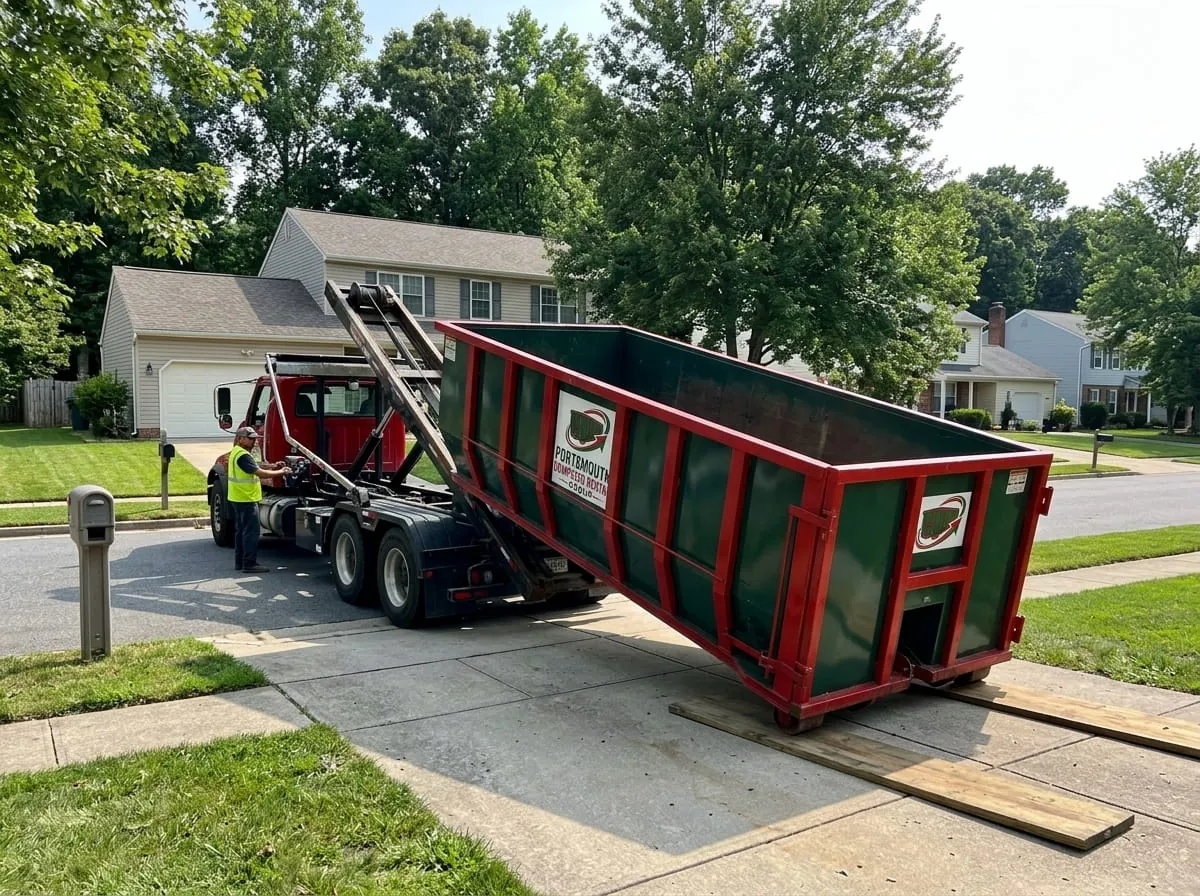
A roll-off dumpster is one of the most useful things you can park at your home during a cleanout, remodel, or roof tear-off. It is also one of the heaviest. An empty 10- or 20-yard container already weighs a few thousand pounds, and once you start filling it with shingles, drywall, old decking, or concrete, the combined load can climb past ten or twelve thousand pounds. All of that weight rides on a handful of small steel contact points, and here in Portsmouth that weight sits on everything from brand-new Churchland concrete to century-old Olde Towne brick and aggregate. If you want your driveway to look the same after the dumpster leaves as it did before it arrived, a little preparation goes a long way.
At Portsmouth Dumpster Rental Group we deliver containers all over Hampton Roads, and the questions we hear most often are about driveways: will it crack the concrete, will it dent the asphalt, will it sink into the yard. The honest answer is that damage is almost always preventable. This guide walks through why roll-offs can mark or crack a surface, the simple steps that stop it, and the specific challenges our coastal, low-lying tidewater soil and humid summers add to the equation.
Why a roll-off dumpster can mark or crack a driveway
The problem is not really the total weight, it is how that weight is concentrated. A delivery truck sets the container down on steel rails and small roller wheels, and sometimes on a pair of rear feet or jack points. Those contact patches are tiny compared to the footprint of, say, a parked car. When thousands of pounds press down through a few square inches of steel, the pressure on that spot is enormous. On a strong, cured concrete slab that is usually fine. On asphalt, older concrete, decorative aggregate, pavers, or brick, that concentrated point load is exactly what leaves a gouge, a dent, a hairline crack, or a permanent indentation.
Two other things make marks more likely. The first is movement. When the truck drags the container off the bed and lets it roll into position, the steel rails and wheels scrape across the surface. Any grit caught underneath acts like sandpaper. The second is heat and moisture, which change how a surface behaves under load. We will come back to both, because in Portsmouth they matter more than almost anywhere else in Virginia.
Boards and plywood: the simplest protection there is
The single most effective thing you can do is put something between the steel and your driveway. Laying down planks, thick plywood, or dedicated dumpster boards spreads that concentrated point load across a much wider area, so instead of all the weight pressing through a few inches of steel it is shared across several square feet of wood. That difference is often the line between a pristine driveway and a set of permanent dents.
What to use and where to place it
Use something substantial. Two-by-tens, two-by-twelves, or three-quarter-inch exterior plywood all work well; thin paneling or scrap OSB will crush and is not worth the trouble. You want boards under the rear wheels and under any contact point where the container will actually rest, plus a run of boards along the path the container travels as it rolls off the truck. Set the boards down before the driver arrives so placement is easy. A good rule is to protect three zones: the touchdown point at the back, the two load-bearing rails or wheels where the box settles, and the drag path in between. If you are renting a smaller container like a 10-yard dumpster for a bathroom remodel or a small cleanout, a couple of sheets of plywood is usually plenty. Heavier loads and larger boxes deserve more coverage.
Weight distribution matters more than you think
How you load the dumpster affects your driveway too. Piling all the heavy material at one end concentrates the load over whatever is underneath that end, and if that happens to sit on a weaker patch of concrete or a soft seam of asphalt, you have created a stress point that lasts the whole rental. Spread heavy debris such as concrete chunks, roofing, tile, and wet soil evenly across the floor of the container rather than heaping it in a corner. Even loading also keeps the box balanced for pickup, which makes the driver's job safer and faster. If you are not sure whether your project calls for one large container or two swaps of a smaller one, our guide on what size dumpster you need can help you match the box to the job and keep the load manageable.
Portsmouth's climate and ground add their own challenges
Generic driveway advice gets you most of the way, but Portsmouth sits in a coastal, low-lying, humid corner of Virginia, and our conditions change the math.
Humid summer heat and softening asphalt
Asphalt is a flexible material by design, and it gets softer as it gets hotter. During a Hampton Roads summer, afternoon surface temperatures on a dark asphalt driveway can run far above the air temperature, and the high humidity means that heat lingers well into the evening. Soft, warm asphalt dents far more easily than cool asphalt, so a container that would sit harmlessly on the same drive in March can press lasting wheel marks into it in July. If your driveway is asphalt, the fix is twofold: always use boards under every contact point, and if you have any choice in timing, have the container delivered and sitting before the hottest part of the day rather than lowered onto pavement that has been baking since noon. Keeping the rental period reasonable helps too, since a loaded box left on hot asphalt for weeks has far more time to sink in.
Low-lying tidewater soil, heavy rain, and tidal flooding
Much of Portsmouth is flat, low, and close to the water table. Our tidewater soil holds moisture, and after heavy rain, a nor'easter, or a high tidal event, the ground can stay saturated for days. Soft, waterlogged ground is a real problem if a container has to sit partly on an unpaved area, a gravel apron, or the edge of a lawn, because the wheels and feet will sink and leave deep ruts, and a saturated base can even undermine the edge of an older driveway. Whenever possible, keep the dumpster fully on a paved, well-drained surface. If part of the box must rest on soil or gravel, use larger boards or even plywood sheets to float the load across the soft ground, and avoid placement in the lowest spot of the yard where water pools. After a storm, give low areas a day to drain before scheduling delivery if you can. When you book with us, tell us about any drainage or flooding concerns and we will plan placement around them.
Concrete, older brick, and decorative aggregate
The surface you have changes the risk and the care required. Newer poured concrete, common on the drives in Churchland and Western Branch, is the most forgiving, but even good concrete can scratch or spall if grit gets dragged across it, so boards still earn their keep. Older concrete with existing cracks is more fragile, because a point load near an existing crack can widen it. Decorative or exposed-aggregate surfaces can lose their finish to scraping. Brick and paver driveways, which you will find on plenty of Olde Towne properties, are the most delicate of all: individual units can shift, chip, or sink under a concentrated load, and a rut in a paver drive means relaying bricks, not just patching. On any of these older or decorative surfaces, generous board coverage is not optional, and in some cases street placement is the smarter choice.
| Surface | Main risk | Recommended protection |
|---|---|---|
| New concrete (Churchland, Western Branch) | Scratching, minor spalling | Plywood under contact points |
| Older or cracked concrete | Crack widening, chipping | Thick boards, spread the load, keep rental short |
| Asphalt | Dents and sinking in summer heat | Boards everywhere, mind the heat and timing |
| Brick or paver (Olde Towne) | Shifting, chipping, ruts | Full board coverage or street placement |
| Gravel or soil edge | Sinking, deep ruts when saturated | Large plywood sheets, avoid low spots |
Tight historic driveways and narrow Olde Towne streets
Olde Towne Portsmouth is one of the oldest neighborhoods in the country, and it was not laid out for modern roll-off trucks. Driveways are short and narrow, street parking is tight, and there is often very little room for the truck to maneuver. On these jobs, careful backing and loading is everything. A driver who rushes the approach can clip a curb, scrape a gate post, or set the box down crooked against a brick edge. An experienced driver takes the time to line up the truck, confirm the drop zone, and lower the container slowly and squarely. If a historic driveway is simply too tight or too fragile, a legal placement at the curb, with the right permits and cones, is often the safest option for the property. We handle this kind of tight-access delivery regularly and can talk through the best approach for your specific lot.
What a good hauler does automatically
A professional should be protecting your property without being asked. When our drivers handle a roll-off dumpster rental, they assess the surface and slope before unloading, place the container where it drains and sits level, lower it gently rather than dropping it, and account for how the box will behave through the whole rental. For residential dumpster rentals on driveways, that care is the difference between a smooth project and a repair bill. We are glad to bring and position boards, and we would always rather spend an extra few minutes on placement than leave a mark on your home.
A quick pre-delivery checklist
- Sweep the drop zone so no grit gets dragged under the steel.
- Lay boards or plywood at the touchdown point, the load-bearing contacts, and the drag path.
- Keep the container fully on paved, well-drained surface whenever possible.
- On asphalt, mind the summer heat and avoid placement on pavement that has baked all afternoon.
- After heavy rain or a tidal event, let low ground drain before delivery.
- Load heavy debris evenly, not piled in one corner.
- Tell your hauler about tight access, fragile surfaces, or drainage concerns up front.
Protecting your driveway really comes down to a few boards, smart placement, and a hauler who treats your property like their own. If you are planning a project in Portsmouth, Churchland, Western Branch, Olde Towne, or anywhere in Hampton Roads and want a crew that takes surface protection seriously, call Portsmouth Dumpster Rental Group at (757) 337-2599 or reach out through our contact page. We will help you pick the right container, plan the placement, and keep your driveway in the same shape we found it.
Owner, Portsmouth Dumpster Rental Group — sharing straight advice from years of local hauling across Portsmouth and Hampton Roads.
Frequently Asked Questions
Will a roll-off dumpster crack my concrete driveway?
It usually will not if the concrete is sound and you use protection. The real risk is the concentrated point load where the container's steel rails and wheels rest. Laying thick boards or plywood under those contact points spreads the weight and protects the slab. Newer Churchland and Western Branch concrete is quite forgiving, but older or already-cracked concrete needs extra care and generous board coverage.
Do I really need to put boards down, or is that overkill?
Boards are the single most effective step you can take, and they are not overkill. All of a loaded container's weight rides on small steel contact points, and wood spreads that load across several square feet instead of a few square inches. For asphalt, older concrete, and brick or paver driveways, boards are essentially required. We are happy to bring and place them for you.
Why is summer heat a problem for asphalt driveways in Portsmouth?
Asphalt softens as it heats up, and in humid Hampton Roads summers a dark driveway can get very hot and stay hot into the evening. Soft, warm asphalt dents far more easily under a container's weight than cool asphalt does. Always use boards on asphalt, try to have the box placed before the hottest part of the day, and keep the rental period reasonable so the load does not have weeks to sink in.
What if my driveway is on soft or flood-prone tidewater ground?
Portsmouth's low, flat tidewater soil holds water, and after heavy rain, a nor'easter, or a high tide the ground can stay saturated for days. A container on soft ground will sink and leave deep ruts. Keep the box fully on a paved, well-drained surface whenever possible, use large plywood sheets to float the load if part of it must sit on soil or gravel, and avoid the lowest spots in the yard. Let low areas drain after a storm before delivery.
Can you still deliver to a tight Olde Towne driveway?
Yes. We deliver to tight historic driveways and narrow Olde Towne streets regularly. It takes careful backing, slow and square placement, and sometimes a smaller container. If a driveway is too tight or too fragile, a permitted placement at the curb is often the safest option. Tell us about your access and surface when you book and we will plan the best approach. Call (757) 337-2599 to talk it through.