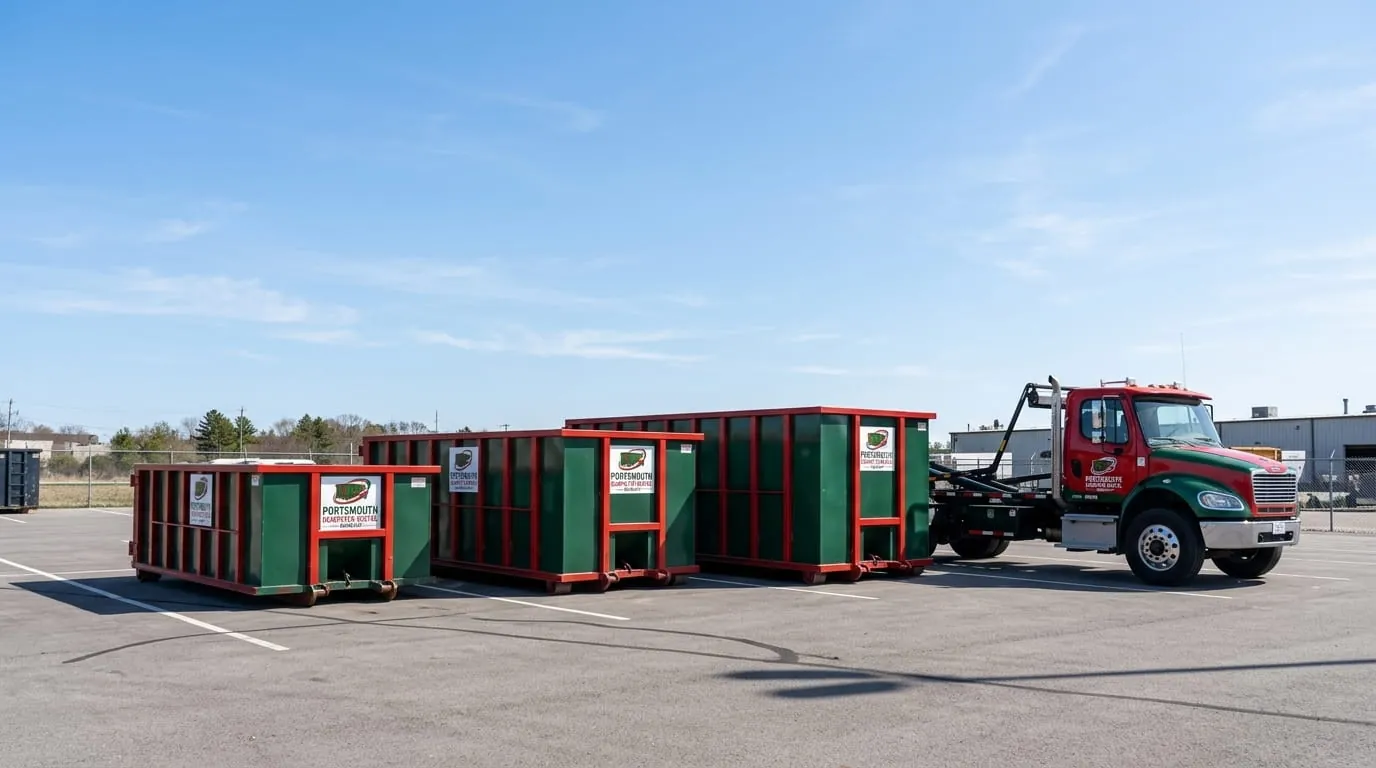
"What size dumpster do I need?" is the first question we hear on just about every call to (757) 337-2599, and it is the right one to ask. Order too small and you are paying for a second haul or stuffing debris into your trunk. Order too big and you are renting air on a tight Olde Towne lot. After years of dropping roll-offs across Portsmouth and the wider Hampton Roads region, we have learned that matching the box to the job is mostly common sense once you understand what each size actually holds, what it weighs, and how our flat tidewater neighborhoods affect placement. Here is the honest breakdown, no fluff.
The Four Roll-Off Sizes We Run
Roll-off dumpsters are measured in cubic yards, which describes volume, not footprint. A "20-yard" holds 20 cubic yards of material. The four sizes below cover roughly 95% of residential and light-commercial jobs in Portsmouth. Weight allowances and exact dimensions vary slightly by container, but these are the real numbers we work with day to day.
| Size | Typical Dimensions (L x W x H) | Holds (pickup loads) | Weight Included | Best For |
|---|---|---|---|---|
| 10-yard | 12 ft x 8 ft x 3.5 ft | 3-4 loads | 1-2 tons | Small cleanouts, heavy debris, concrete, dirt, single-room demo |
| 15-yard | 14 ft x 8 ft x 4 ft | 4-6 loads | 1.5-2.5 tons | Garage cleanouts, mid-size roofing, small reno |
| 20-yard | 16 ft x 8 ft x 4.5 ft | 6-8 loads | 2-3 tons | Whole-room renos, large roof tear-offs, flooring, big cleanouts |
| 30-yard | 22 ft x 8 ft x 6 ft | 9-12 loads | 3-4 tons | Whole-home renos, new construction, major cleanouts |
Notice the footprint barely changes between sizes. A 10-yard and a 30-yard are both about 8 feet wide and need roughly the same length of driveway or street frontage. The difference is height and volume, which matters when you are picturing a container on a narrow Port Norfolk driveway.
Weight Limits and Overage Fees: The Part People Forget
Every roll-off comes with an included weight allowance, and this is where surprise charges come from. Go over the tonnage and you pay an overage fee, usually billed per ton. The rule we drill into every customer: volume fills up on light, bulky stuff; weight gets you on dense, heavy stuff.
Furniture, drywall scraps, cardboard, and household junk are light. You will fill a 20-yard to the brim long before you hit the weight cap. But concrete, brick, dirt, asphalt shingles, roofing, and wet storm debris are dense. A 20-yard loaded with concrete could be two or three times over its weight limit while looking half empty. That is why heavy material almost always goes in a smaller box.
Why Heavy Debris Needs a Small Bin
If you are tearing out a concrete patio, removing dirt from a yard regrade, or pulling three layers of old shingles off a 1950s Churchland ranch, do not reach for the big container. A 10-yard filled with concrete can still exceed its limit, so we often set a hard fill line and tell you to stop at the halfway mark. It feels counterintuitive to rent a small box and not fill it, but it keeps you under the weight cap and saves you money. For these jobs, ask us about a dedicated heavy-debris bin when you call. Our team on our roll-off dumpster rental page can walk you through tonnage before you order.
Matching the Size to Your Job
Here is how we size real Portsmouth projects.
Bathroom Remodel: 10-15 Yard
A single bathroom gut, tile, vanity, tub, drywall, fixtures, fits comfortably in a 10-yard. If you are doing two bathrooms or adding old flooring from an adjacent hall, step up to a 15-yard. The old cast-iron tubs in historic Olde Towne homes are heavy, so factor that in.
Kitchen Remodel: 15-20 Yard
Cabinets, countertops, appliances, flooring, and drywall add up fast. A 15-yard works for a modest kitchen refresh; a full gut with new layout usually calls for a 20-yard. Granite and tile countertops add weight, so do not top it off.
Whole-Home Renovation: 20-30 Yard
Gutting a 1950s brick ranch in Churchland or Western Branch down to the studs generates serious volume. A 30-yard is the workhorse here. For military and Navy families turning a recently purchased fixer-upper into a long-term home before the next PCS, the 30-yard keeps the project moving without multiple hauls. See our residential dumpster rental options for multi-week pricing.
Roof Tear-Off: 15-20 Yard (Heavy Debris Rules Apply)
Shingles are deceptively heavy. A single square (100 sq ft) of asphalt shingle weighs 230-430 lbs, and older Portsmouth homes often carry two or three layers. For a typical 2,000 sq ft roof with one layer, a 15-yard is usually right. Multiple layers or larger roofs push you to a 20-yard, but we watch the tonnage closely and may recommend splitting the load.
Garage or Estate Cleanout: 15-20 Yard
Decades of accumulated stuff, boxes, old furniture, tools, lawn equipment, fills a 15-yard for most single-car garages and a 20-yard for packed two-car garages or full estate cleanouts. This material is bulky but light, so volume is your constraint, not weight.
New Construction: 30 Yard
Framing scraps, packaging, offcuts, and jobsite debris from new builds in the growing Western Branch corridor belong in a 30-yard. Our construction dumpster rental service handles swap-outs so your crew never stops.
The Portsmouth and Hampton Roads Angle
Local conditions change the sizing math more than people expect.
- Tight historic lots. Olde Towne and Port Norfolk homes sit on narrow lots with short driveways and on-street parking. The footprint of a 30-yard may not fit, so a 20-yard, or two smaller hauls, can be the practical choice even when volume suggests going bigger. Street placement may require a city permit, which we can advise on.
- 1950s brick ranches. Churchland and the older suburbs are full of solid brick ranches. Renovations here mean heavier debris, plaster, masonry, cast iron, so we lean toward smaller boxes watched closely for weight.
- Newer suburbs. Western Branch and newer Churchland subdivisions have wide driveways that easily take a 30-yard, giving you more flexibility.
- Military and Navy families. PCS moves and deployments tied to the Norfolk Naval Shipyard mean tight timelines. We keep next-day drop-off available so a cleanout before a move or after a tenant turnover does not stall your orders.
- Flat tidewater lots. Portsmouth sits on flat coastal plain, which is great for placement, roll-offs set level and roll on and off cleanly. Just keep soft, rain-soaked ground in mind after a storm; we may lay boards to protect your driveway.
- Hurricane, nor'easter, and tidal flooding cleanup. When a storm pushes water into low-lying neighborhoods, debris is wet, heavy, and mixed, drywall, carpet, ruined furniture, and flood muck. Wet material weighs far more than dry, so we size conservatively and often recommend a 20-yard over a 30-yard to stay under weight after flooding.
- Hot, humid summers. Yard waste and vegetation cleanups spike in our long summers. This material is bulky and light, so volume drives the size; a 15 or 20-yard usually covers major landscaping clearouts.
Flooring, Siding, and Deck Tear-Offs
Flooring projects vary wildly by material. Pulling carpet and pad from a Western Branch rancher is light and bulky, so a 15-yard goes a long way. But tile, hardwood over plywood subfloor, or thinset-backed ceramic adds real weight, so a 20-yard watched for tonnage is safer. Vinyl siding tear-offs are light and fill fast on volume, while old wood siding and fiber-cement scraps are heavier. Deck demolition is one of the trickiest to size: the lumber itself is bulky, but old pressure-treated boards soak up moisture in our humid climate and weigh more than they look. For a standard backyard deck, a 15-yard usually does it; a wraparound or elevated deck on a flood-prone waterfront lot may need a 20-yard.
Multi-Family and Light Commercial
Rental turnovers, small office refreshes, and retail buildouts around Portsmouth generate a steady mix of drywall, ceiling tile, fixtures, and packaging. These jobs usually land on a 20-yard, and for anything running several weeks we can set up scheduled swap-outs so your crew and timeline stay on track.
Quick Decision Rules
- Heavy debris (concrete, dirt, brick, shingles, flooded material) - go smaller and watch tonnage.
- Light and bulky (furniture, junk, yard waste, cardboard) - go by volume, size up.
- Not sure between two sizes - the cost gap is usually small, and a single right-sized haul beats paying for a second trip. When in doubt, size up on volume jobs and down on weight jobs.
- Tight lot - measure your driveway or frontage first; all our boxes are about 8 ft wide.
If you want to see individual specs side by side, our size pages break down the 20-yard dumpster and the rest of the lineup in detail. Still unsure about what your debris weighs? Our guide on what can go in a dumpster covers restricted materials and weight considerations.
Get the Right Size the First Time
You do not have to guess. Tell us the job, the neighborhood, and the kind of debris, and we will match you to the right box and a flat, honest price with no surprise overage. We know Portsmouth streets, Hampton Roads weather, and the quirks of everything from Olde Towne townhouses to Western Branch new builds. Call Portsmouth Dumpster Rental Group today at (757) 337-2599 or reach out through our contact page to book your roll-off and keep your project moving.
Owner, Portsmouth Dumpster Rental Group — sharing straight advice from years of local hauling across Portsmouth and Hampton Roads.
Frequently Asked Questions
What is the most popular dumpster size in Portsmouth?
The 20-yard roll-off is our most-requested size because it handles the majority of local jobs, whole-room renovations, large roof tear-offs, flooring projects, and big cleanouts, while still fitting on most Portsmouth driveways. For heavy debris like concrete or flooded storm material we usually recommend a smaller 10 or 15-yard to stay under the weight limit.
Will a dumpster fit on my narrow Olde Towne lot?
Usually, yes. All our roll-offs are about 8 feet wide, so the footprint is similar across sizes; height and length change. On tight historic lots in Olde Towne or Port Norfolk, a 20-yard often works where a 30-yard will not. If driveway space is limited we can discuss on-street placement, which may require a city permit. Measure your available space and give us the dimensions when you call.
Why can't I fill a dumpster with concrete to the top?
Concrete, brick, dirt, and asphalt are extremely dense. A container loaded with heavy debris can exceed its weight allowance long before it looks full, triggering per-ton overage fees or making it unsafe to haul. For heavy material we set a fill line, often around the halfway mark, and recommend a 10-yard heavy-debris bin so you stay under the tonnage cap and avoid surprise charges.
What size do I need to clean up after a hurricane or tidal flood?
Storm and flood debris is wet and heavy, drywall, soaked carpet, ruined furniture, and muck weigh far more than dry material. Even though the volume looks big, we usually recommend a 20-yard over a 30-yard after flooding so you stay under the weight limit. For widespread damage we can schedule swap-outs so cleanup never stops.
Can I get a dumpster delivered quickly for a PCS move or tight deadline?
Yes. We keep next-day and often same-day delivery available across Portsmouth and Hampton Roads, which matters for military and Navy families working around PCS moves, deployments, and property turnovers near the Norfolk Naval Shipyard. Call (757) 337-2599 with your timeline and we will get a right-sized roll-off to your address fast.