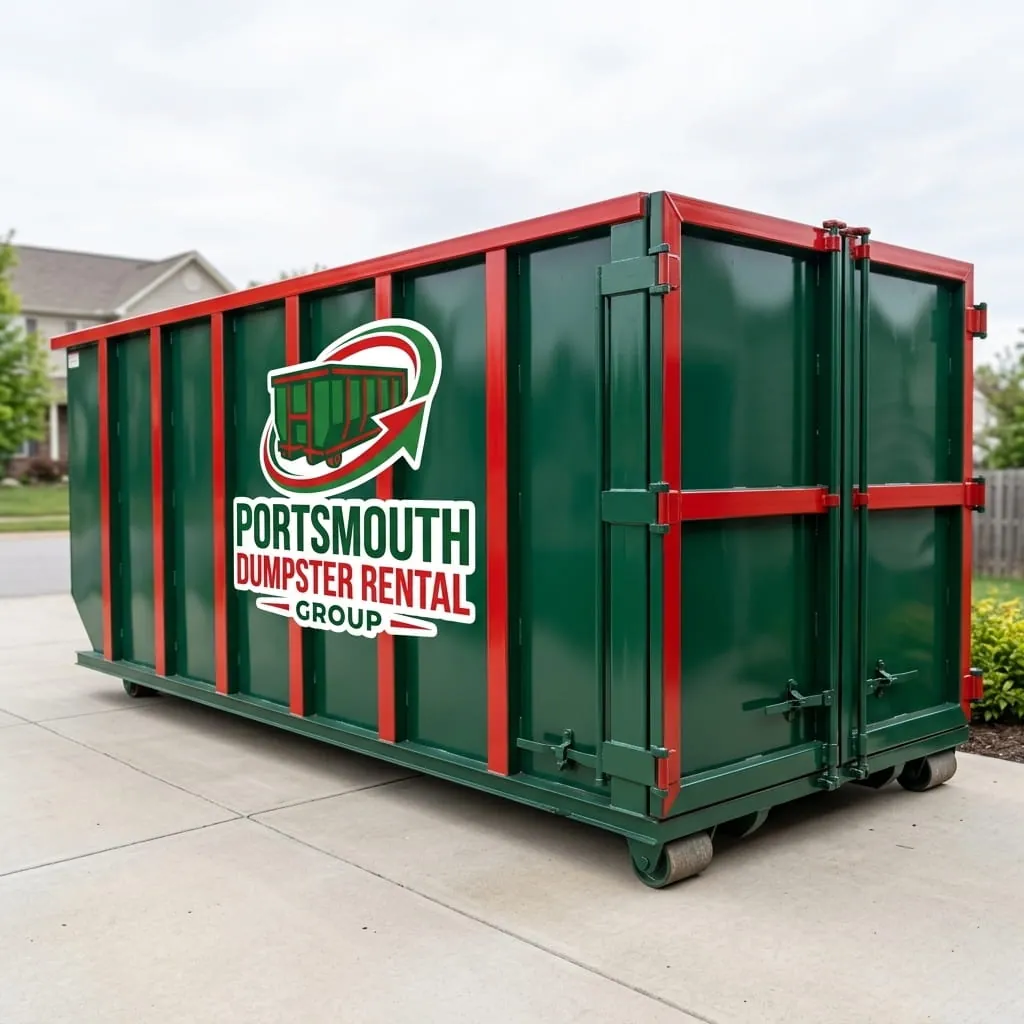
After years of dropping roll-offs on driveways from Olde Towne to Western Branch, I can tell you that nothing fools homeowners quite like roofing debris. It looks manageable. A stack of old shingles in the corner of the yard does not seem like much. Then the scale ticket comes back from the transfer station and the number is double what folks expected. Roofing is deceptively, punishingly heavy, and it is the one job where picking the wrong dumpster size turns a clean project into a budget headache.
This guide walks through how we size roofing dumpsters here in Portsmouth and the wider Hampton Roads area: the shingle weight math, why roofing debris demands a dedicated smaller bin, how to estimate your squares, and how to protect your property during tear-off. I will also get into why Coastal Virginia roofs wear out the way they do, because the storm season we live with drives a lot of the re-roofs I load.
Why Roofing Debris Is So Heavy
Here is the thing most people never think about: a cubic yard of general household junk might weigh 150 to 250 pounds. A cubic yard of tear-off shingles weighs closer to 700 pounds, sometimes more when it is soaked with rain or carrying old felt and ice-and-water membrane. That is why a bin that looks half empty by volume can already be maxed out by weight.
Asphalt shingles are petroleum, mineral granules, and fiberglass or felt mat. They are dense by design, and they hold water. In our humid summers a stack sitting in the yard for a weekend will pull moisture out of the air and gain weight before it ever reaches the truck. That is before we add nails, old underlayment, drip edge, and the occasional rotten decking board.
The Shingle Weight Math You Actually Need
Roofers measure in squares. One roofing square equals 100 square feet of roof surface. Shingles come in bundles, and the bundle count per square depends on the product:
- 3-tab shingles: roughly 3 bundles per square, with each bundle weighing about 60 to 70 pounds. That is around 200 pounds per square for a single layer.
- Architectural (dimensional) shingles: also about 3 bundles per square, but the bundles are heavier, often 70 to 90 pounds each. Figure 240 to 320 pounds per square.
So the quick math is: take your number of squares, multiply by roughly 250 pounds for a single layer of architectural shingle, and you have a working estimate in pounds. Divide by 2,000 to get tons. A typical Churchland ranch might have 20 squares. Twenty squares at 250 pounds is 5,000 pounds, or 2.5 tons, for one layer. Add a second layer and you are looking at 5 tons before you count the tear-off felt, nails, and any wet decking.
That example is exactly why I steer roofing customers toward a dedicated bin sized by weight, not by how tall the pile looks.
Why Roofing Needs Its Own Smaller Bin
New customers often ask me for a 30-yard or 40-yard container because they assume bigger is safer. For roofing, bigger is usually a trap. Every roll-off has a weight rating, and if you fill a large box with shingles you will blow past that rating long before the box is full. At that point the truck legally cannot haul it, and you are either paying overage fees by the ton or waiting while we offload material.
That is why we rent a dedicated roofing dumpster in the 10 to 15 yard range for most tear-offs. A smaller box with a generous weight allowance is the right tool. It keeps the center of gravity low, it sits better on a residential driveway, and it fits the tonnage a roof actually produces.
Matching Squares to a Dumpster Size
Here is how I generally size roofing jobs around Portsmouth:
| Roof Size | Layers | Recommended Bin |
|---|---|---|
| Up to 15 squares | Single layer | 10 yard |
| 15 to 25 squares | Single layer | 15 yard |
| 20 to 30 squares | Two layers | 15 yard (watch tonnage) |
| 30+ squares or 3 layers | Multiple | Two hauls or a 20 yard with weight cap |
The 15-yard dumpster is the workhorse for Hampton Roads re-roofs. It swallows a mid-size home's single-layer tear-off and still leaves room for the underlayment and flashing. If your roof is small and simple, a 10-yard may be all you need. When you are genuinely unsure, our estimate on the phone is free and it is a lot cheaper than guessing wrong.
Estimating Your Squares Without Climbing Up There
You do not need to walk the roof to get a decent estimate. Take your home's footprint square footage, account for the roof pitch, and add for overhangs. A simple gable roof on a 1,500 square foot single-story home is often around 17 to 20 squares once you factor pitch. Steeper roofs have more surface area than their footprint suggests, so a steep cut-up roof on a historic home will run higher than the footprint implies.
If your contractor has already quoted the job, ask them for the square count directly. They calculated it to order materials, and that same number tells us exactly what size bin to send. If you are doing it yourself, measure each roof plane, multiply length by width, total it up, and divide by 100. That gives squares.
Single Layer vs. Multiple Layers
This is the single biggest variable in Portsmouth, and it is where a lot of homeowners get surprised. Virginia code generally allows up to two layers of shingles before a full tear-off is required. Plenty of older homes in Olde Towne and Port Norfolk have been roofed over at least once, sometimes twice, over the decades. When a contractor tears off two or three layers, your debris weight doubles or triples.
Before you rent, go up into the attic or peek at a roof edge and count the layers. Two layers coming off a 20-square roof is roughly 10,000 pounds of shingles alone. That changes everything about sizing. If you find three layers on an old house, plan on either a larger bin with a strict weight cap or a second haul. Tell us up front and we will build the right plan so there are no surprises on the ticket.
Nails, Underlayment, and the Rest of the Pile
Shingles are the bulk, but a tear-off produces more than shingles. You will have old felt or synthetic underlayment, ice-and-water shield around valleys and penetrations, drip edge, pipe boots, and thousands of nails. On older homes you may pull up rotten or delaminated decking that has to go too. All of it is fine in a roofing dumpster, and all of it adds weight and volume, so leave a little headroom when you plan.
The nails are the sneaky hazard. A tear-off scatters roofing nails across the yard and driveway no matter how careful the crew is. A rolling magnet run at the end of each day is worth every minute. It protects your tires, your lawn mower, and bare feet, which matters on the kind of family lots we see out in Churchland and Deep Creek.
Protecting Your Driveway and the Street
A loaded roofing bin is heavy, and so is the truck that places it. On the brick and older concrete driveways around Olde Towne, and on any driveway that has seen a few Virginia freeze-thaw cycles, I always recommend putting boards down under the container's contact points to spread the load. We bring wood for this, and it is standard practice on any surface you care about.
Tear-off debris also tends to overshoot the bin, especially when a crew is shoveling a roof edge directly into the box. A tarp on the driveway and along the drip line catches stray shingles and that cloud of granules and nails. If you want the full rundown on keeping your concrete and pavers in good shape, we put together a guide on protecting your driveway during a dumpster rental that is worth a read before placement day.
Placement on Tight Olde Towne Lots
Portsmouth has two very different placement challenges. In historic Olde Towne and Port Norfolk, lots are narrow, driveways are short, and street parking is tight. We often place the bin partly in the driveway and work with you on the approach so the truck can set it clean. Where a driveway simply will not work, a street placement may be an option, but some areas require a permit for a container in the public right of way. We will tell you whether your block needs one.
Out in the newer Churchland and Western Branch subdivisions the driveways are wider and the setbacks are generous, so placement is usually straightforward. Even there, think about where the roofers will be working so the bin sits on the side of the house that minimizes the carry distance. A shorter throw means faster tear-off and less debris on the ground.
The Coastal Virginia Factor
Hampton Roads is hard on roofs, and that is why we load so many tear-offs. The salt air off the Elizabeth River and the Chesapeake works at the mineral granules and the metal flashing year after year. Our summers are hot and humid, which bakes and then steams asphalt shingles through daily heating and cooling cycles that crack and curl them faster than in a drier climate.
Then there is storm season. Nor'easters in the colder months, and tropical systems and the occasional hurricane in late summer and fall, drive wind damage that sends homeowners into insurance re-roofs. After a big blow we see a wave of wind and storm claims around Portsmouth, and those re-roofs need dumpsters fast. If you are working an insurance timeline, call early so we can get a bin on your driveway while the adjuster's paperwork is still fresh.
All of this means our roofs simply do not last as long as the brochure claims. A shingle rated for 30 years in a mild climate may give you 18 to 22 here before the granule loss and wind lifting force a replacement. Older homes that have been roofed over once already are prime candidates for a full multi-layer tear-off, with all the weight that implies.
Avoiding Overage Fees
Overage charges come from one thing: exceeding the bin's included weight allowance. With roofing, that is easy to do if you guess the size or underestimate the layers. The way to avoid it is simple. Get an honest square count, be truthful about how many layers are coming off, and let us size the bin to the tonnage rather than the look of the pile. A right-sized roofing bin with the layers counted correctly almost never surprises anyone at the scale.
If you are still weighing options, our broader guide to picking a container size covers the whole lineup, not just roofing, and it pairs well with this one. When you are ready, the fastest path is a quick call so we can match the bin to your roof.
Portsmouth Dumpster Rental Group has been handling tear-offs across Hampton Roads for years, and we size roofing bins right the first time. Call us at (757) 337-2599 or reach out through our contact page and we will get the right dumpster on your driveway before the first shingle comes off.

Owner, Portsmouth Dumpster Rental Group — sharing straight advice from years of local hauling across Portsmouth and Hampton Roads.
Frequently Asked Questions
What size dumpster do I need for a roof tear-off in Portsmouth?
For most single-layer re-roofs on Hampton Roads homes, a 15-yard dumpster is the right call, and a 10-yard works for small or simple roofs under about 15 squares. Because shingles are so heavy, we size roofing bins by weight rather than volume, so a smaller box with a solid weight allowance is safer than a big one you cannot legally haul. Tell us your square count and the number of layers and we will match it exactly.
How much does roofing debris weigh?
A single layer of architectural shingles runs about 240 to 320 pounds per square (100 square feet), and 3-tab shingles about 200 pounds per square. A 20-square roof with one layer is roughly 2.5 tons of shingles alone. Add a second layer, plus underlayment, nails, and any rotten decking, and the weight climbs fast, which is why counting layers before you rent matters so much.
Why can't I just use one big dumpster for my roof?
Every roll-off has a weight rating, and shingles are dense enough that you will hit that rating long before a large box looks full. If you overload a 30 or 40 yard bin with roofing debris, the truck legally cannot haul it and you face overage fees or a delay while we offload material. A dedicated 10 to 15 yard roofing bin is sized to the tonnage a roof actually produces, so it is both safer and cheaper.
Do I need a permit to place a roofing dumpster in Portsmouth?
If the container sits entirely on your own driveway or property, you generally do not need a permit. If it has to go in the street or public right of way, which sometimes happens on tight Olde Towne and Port Norfolk lots, some locations require one. When you book, tell us where the bin needs to sit and we will let you know whether a street placement calls for a permit.
How do I protect my driveway during a roof tear-off?
We place boards under the container's contact points to spread the load, which matters on older concrete and brick driveways that have been through Virginia freeze-thaw cycles. Laying a tarp on the driveway and along the drip line catches stray shingles, granules, and nails, and a rolling magnet run at the end of each day sweeps up the nails that scatter across the yard. These simple steps keep your surfaces and tires safe during the job.